Triage
Hospital registration independent of mobile use, administrative queue management, and optional QR linking.
Hospital and patient coordination
LUJEQ gives emergency departments an optional link to the patient app, dedicated staff tools, and a relay infrastructure designed to minimize exposed data.
One platform, four roles
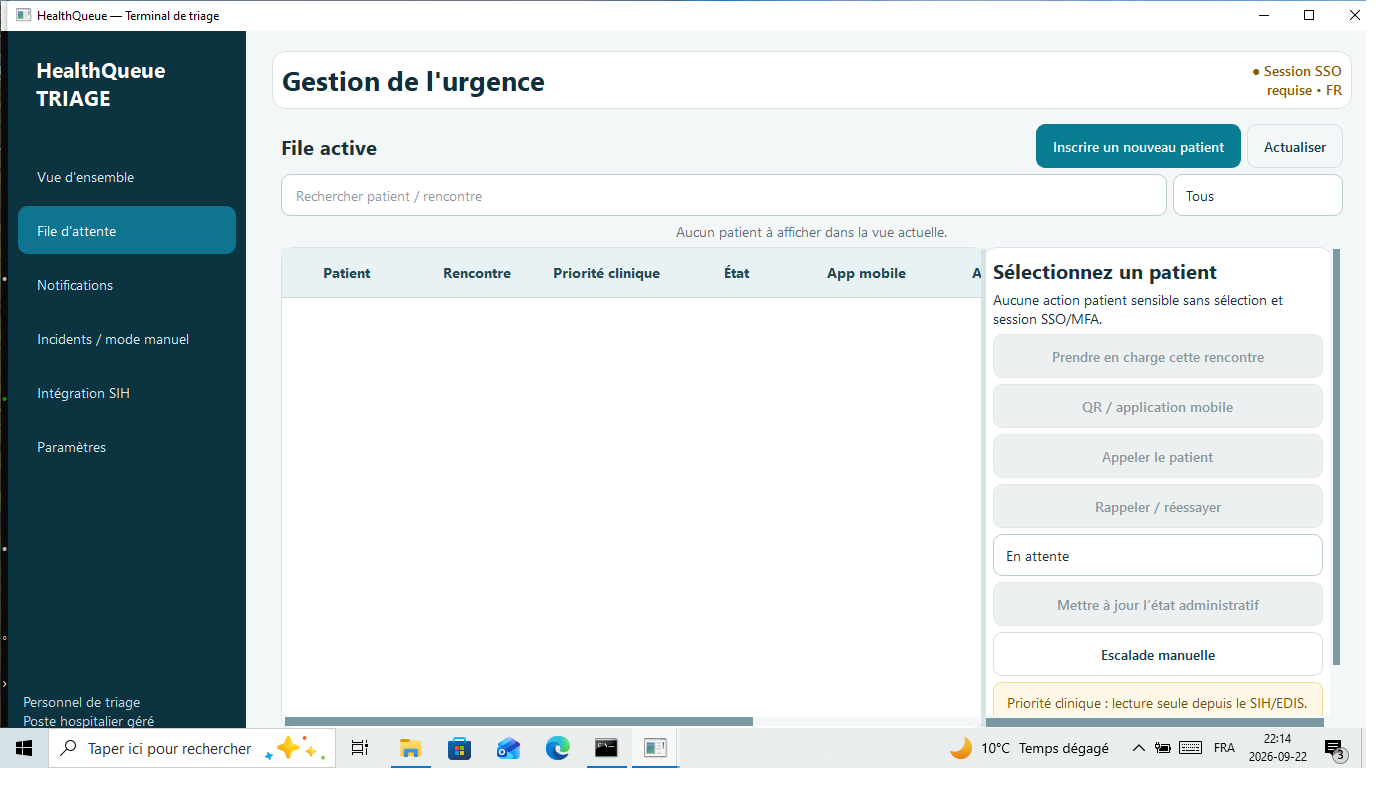
Hospital registration independent of mobile use, administrative queue management, and optional QR linking.
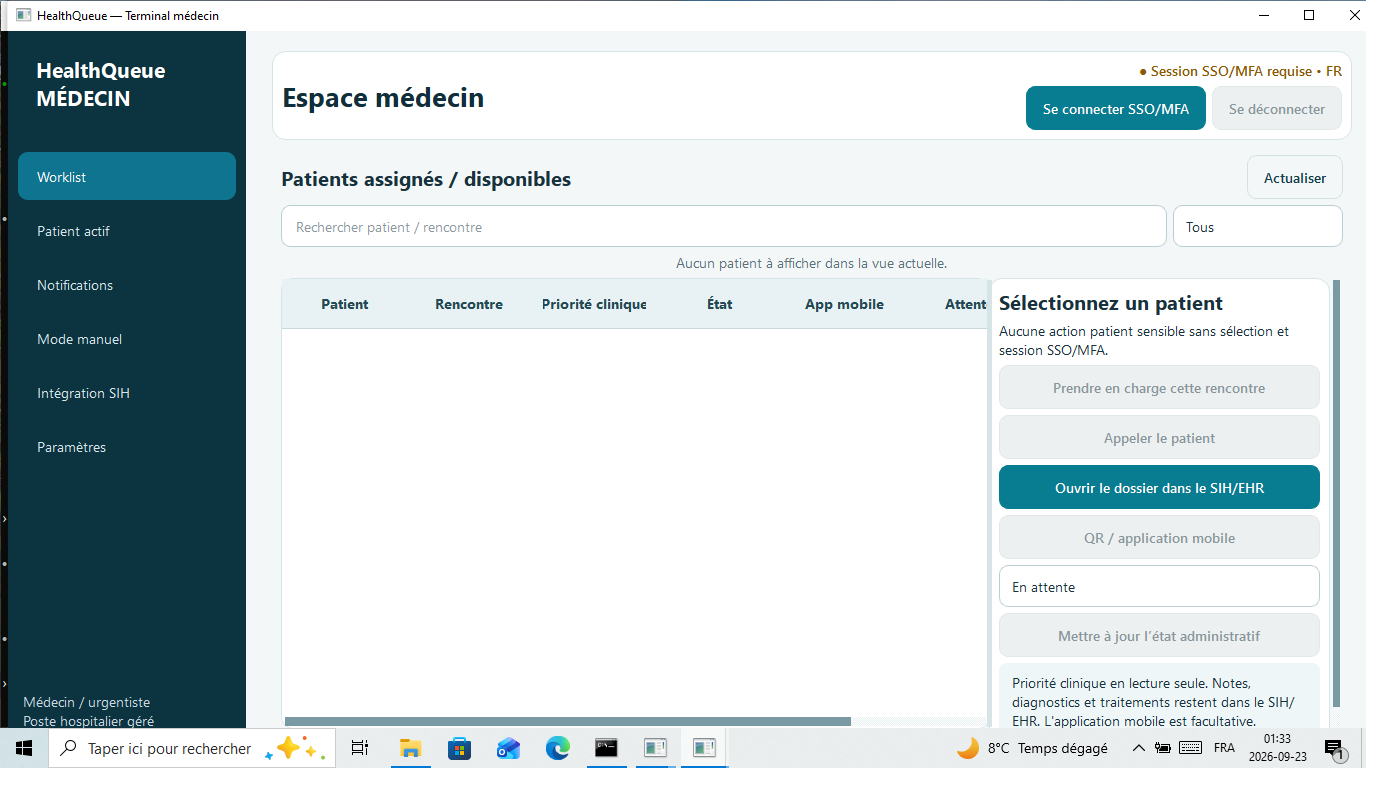
Assigned worklist, neutral calls, and controlled hand-off to the organization's HIS/EHR.
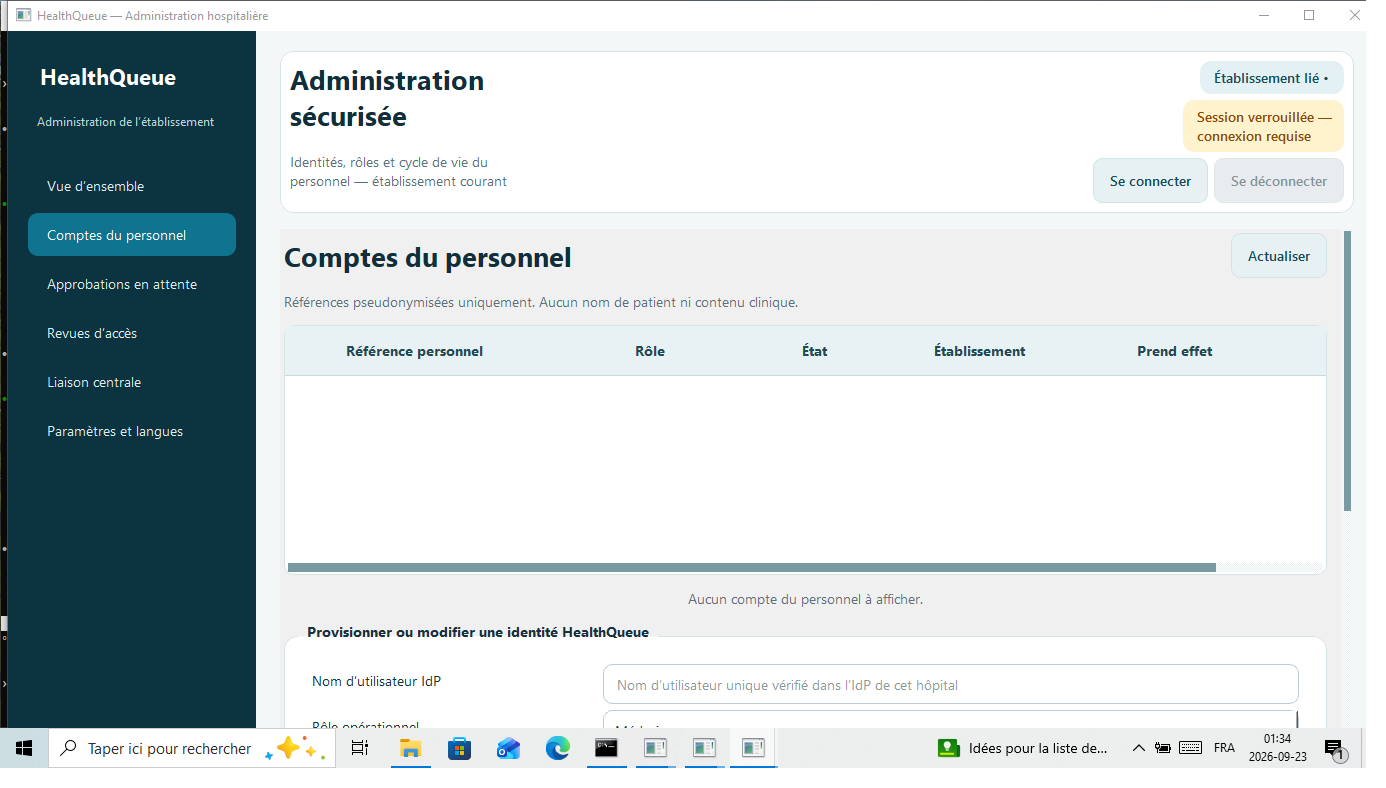
Staff identities, roles, approvals, access reviews, and central connectivity.
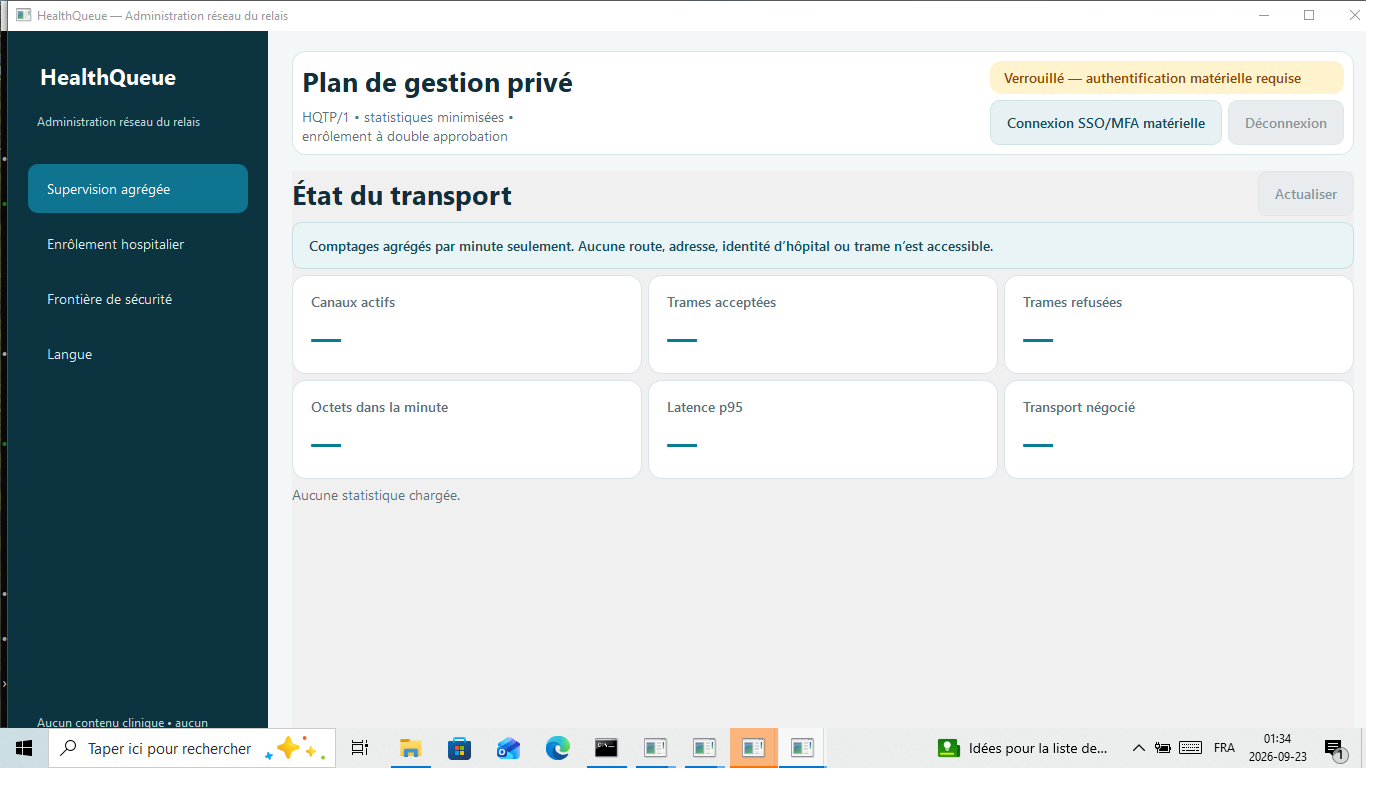
Enrollment, certificates, revocation, and transport supervision without visible clinical content.
Controlled journey
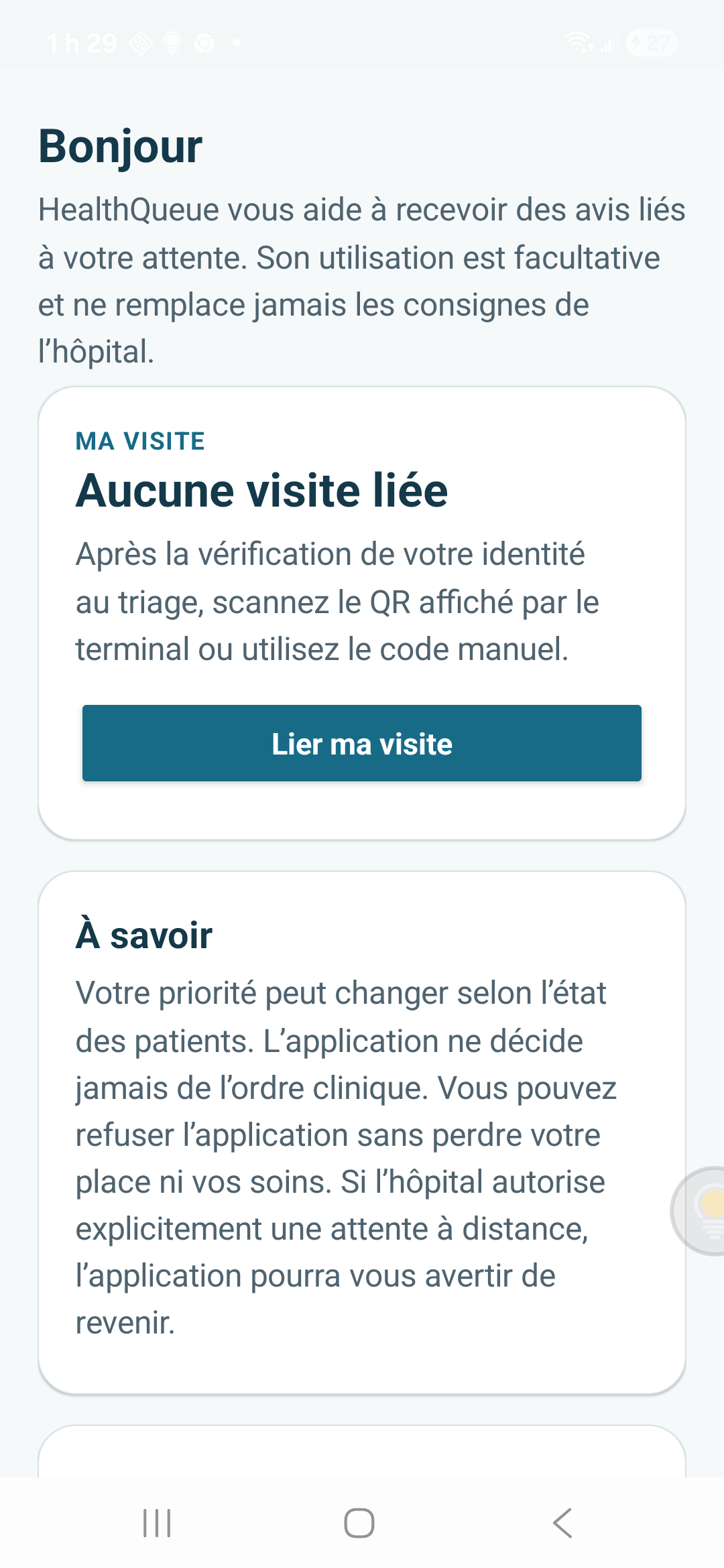
The patient enters the hospital queue whether or not they use the application.
A limited-use QR or code links the application to the visit without exposing the clinical record to the relay.
Hospital staff initiate a neutral notification. Patient calls are never automated.
The temporary link ends with the visit lifecycle and can be revoked by the authorized service.
Actual product
Institutional pricing
Monthly pricing by quote
Deployment for one hospital, role-specific terminals, and initial onboarding.
Annual pricing by quote
Multiple organizations, centralized governance, and regional deployment planning.
Controlled evaluation
Limited technical and operational validation before a deployment commitment.
Public amounts will be displayed after commercial approval. No provisional price is presented as a contractual offer.
Trust architecture
Minimized data. The relay carries opaque routes and encrypted content.
Human control. Notifications are authorized by hospital staff.
Separated access. The public site and protected central console do not share the same access level.
Institutional questions
No. Registration, waiting, and hospital care remain available without a phone or application.
Essential hospital functions remain local. The mobile link displays a neutral outage notice until service returns.
Only authenticated and authorized hospital staff. The central system never decides automatically to call a patient.
The intended architecture limits the relay to opaque routes and end-to-end encrypted content; production validation remains mandatory before real data is used.
After legal, security, and privacy review, a limited scope is agreed with the organization and tested without clinical data before activation.
The deployment includes the local hospital server, authorized terminals, the secure relay, and the optional patient application.
LUJEQ project
The commercial form and official contact details will be enabled after the final domain and legal identity are established.
Central console — restricted access